What we do
We focus on one thing — oil tank removal — because it's a specific job that benefits from specialization. We're not a general HVAC company that happens to do tanks. We do tanks. Underground (buried) removals, aboveground (basement or outdoor) removals, and pre-insurance inspections.
Why we exist
A lot of homeowners in HRM get caught off guard by their insurer flagging an aging oil tank. The non-renewal letter shows up, and suddenly you've got 60 days to either remove the tank, replace it, or switch to a heat pump. Most general contractors won't move that fast; the ones who do are either booked out months or don't really understand the regulatory side. We exist to be the people who pick up the phone on those calls and have a quote in your inbox within 48 hours.
How we work
- Site visits and written quotes. We don't quote sight-unseen. Buried tank access varies a lot from yard to yard.
- NS regulations followed. All disposal at licensed facilities. Documentation provided.
- Honest contamination calls. If we find dirty soil during a buried tank dig, you'll know the same day and we'll quote any cleanup before continuing.
- Insurance-deadline-aware. Tell us when your insurer's clock runs out and we schedule backwards from that.
What to expect from a site visit
Most quote visits are 15 to 30 minutes. We arrive within a 30-minute window of the agreed time. Here is what actually happens:
- Walk-through. We confirm the tank type (underground, basement aboveground, outdoor aboveground), measure access, and note proximity to property lines, foundations, gardens, and drains.
- Tank location confirmation. For underground tanks, we use a probe or metal detector when the homeowner is not 100% sure where the tank sits. Buried tanks have a habit of being "about there, I think."
- Photos. We take 6 to 10 photos — the tank itself, the access route, the soil surface, and any obstacles. The operator returning for the actual job sees those photos before arriving.
- Honest scope. We talk through what could change the quote: soil contamination, an access surprise, an unusual fuel-line route. You hear the worst case before you sign anything.
- Written quote. Lands in your inbox within 48 hours. Itemized, with what is and is not included.
How HRM oil tank rules actually work
Three layers of rules apply to a residential oil tank in HRM. Knowing which one is driving your decision changes the timeline:
- Provincial — NS Fuel Safety Act. Governs installation, removal, and oil-spill liability. If a tank leaks during removal, the homeowner is legally responsible for cleanup. That is why we test soil during every underground dig — finding a problem before backfill is far cheaper than finding it a year later when a tree starts dying.
- National — CSA B-139. The CSA installation code for oil-burning equipment. Vent and fill clearances, supply-line specifications, tank distances from ignition sources. Inspectors check against this standard.
- Insurance norms. Each NS home insurer sets its own replacement-age thresholds. The most common pattern: 10 years for plain steel tanks, 15 years for coated or double-bottom steel, 20 years for fibreglass. Many homeowners only learn their tank is "too old" when the non-renewal letter shows up. Once an insurer has flagged you, the clock is usually 30 to 60 days.
Common HRM tank scenarios we see
Three patterns make up most of the calls we get:
- The Halifax peninsula buried tank. Older homes from the 1920s through the 1960s often have a buried tank in a side yard or backyard. The trigger is usually an insurer non-renewal letter. Access is the variable — narrow row-house lots on the peninsula can be tight for an excavator, and we sometimes work in from the street with smaller equipment.
- The Dartmouth basement aboveground tank. Split-levels and bungalows from the 1970s through 1990s frequently have a 275-gallon steel tank in an unfinished basement. Conversion to a heat pump under the Efficiency Nova Scotia rebate is the most common reason for removal.
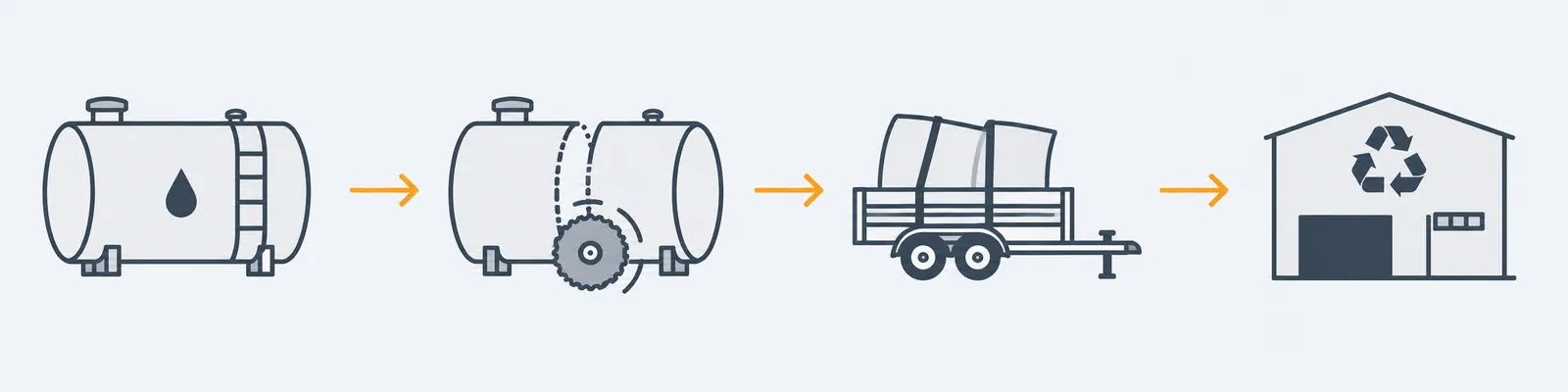
- The Bedford / Fall River outbuilding tank. Larger suburban lots often have an outdoor tank on a concrete pad or inside a small shed or garage. These are the easiest removals — usually a same-day job with clean access for the truck and a straightforward drain-cut-haul.
Service area
Across HRM: Halifax, Dartmouth, Bedford, Sackville, Cole Harbour, Spryfield, Hammonds Plains, Fall River, Waverley, and the immediately surrounding communities. Outside that radius? Call (902) 912-2483 — we'll tell you honestly whether we can help.
Postal codes we routinely cover:
- Halifax peninsula: B3H, B3J, B3K, B3L
- North End, Clayton Park, Fairview, Bayers Lake: B3L, B3M, B3N, B3R, B3S
- Dartmouth, Cole Harbour, Eastern Passage: B2W, B2X, B2Y, B2Z, B3A
- Bedford, Hammonds Plains, Fall River, Waverley: B4A, B4B, B4E, B2T
- Sackville, Beaver Bank: B4C, B4E, B4G
- Spryfield, Herring Cove, Sambro Loop: B3P, B3R
Hours
- Monday, Tuesday, Wednesday, Thursday, Friday: 08:00 — 18:00
- Saturday: 09:00 — 16:00
For urgent insurance-deadline jobs, call any time — we'll return voicemails next business day.
Contact
Phone: (902) 912-2483
Service area: HRM, Nova Scotia